Users & permissions
Identify who uses the system, what each role needs to do and which information each person should be able to access.
When a business workflow needs more than a website, start with the people doing the work. Define a useful first release, then build and review it against clear requirements.
Bring us the workflow, the people using it and the tools it needs to connect to. We help separate the essential first version from features that can wait.
Software is quoted after discovery. For complex systems, discovery is a separately agreed paid phase, with its deliverables and price confirmed before it starts.
Identify who uses the system, what each role needs to do and which information each person should be able to access.
Choose the workflow worth solving first. Agree what is included, what can wait and how you will decide that the release is ready.
Map the information entering and leaving the system. Define data responsibilities, access, retention, exports and any migration requirements.
Identify existing services and required integrations. Access, compatibility, vendor terms and technical limits are checked before a connection is promised.
Set review milestones and acceptance criteria around the agreed tasks. Testing, feedback and changes belong in the delivery plan.
Agree source-code and account access, third-party licences, training, hosting, maintenance and support responsibilities before the build.
The schedule follows the scope, data requirements, integration access and review turnaround. Agree the milestones and responsibilities for your project.
Discuss the people, decisions, existing tools and friction in the current process. Discovery defines the problem and the requirements for a useful first version.
Turn the requirements into a written scope, estimated schedule, budget and acceptance criteria. Review interfaces and important decisions before committing to the full implementation.
Review working features at the agreed milestones. Resolve feedback against the scope, and agree the cost and schedule of additional requirements before adding them.
Check the agreed journeys and permissions, prepare deployment and document the handover. Ongoing hosting, updates and support follow the terms chosen for the project.
Cheezious software work, our separate MISE / BistroWise product and Danishwar private beta show different areas of our experience. These previews are public-facing.
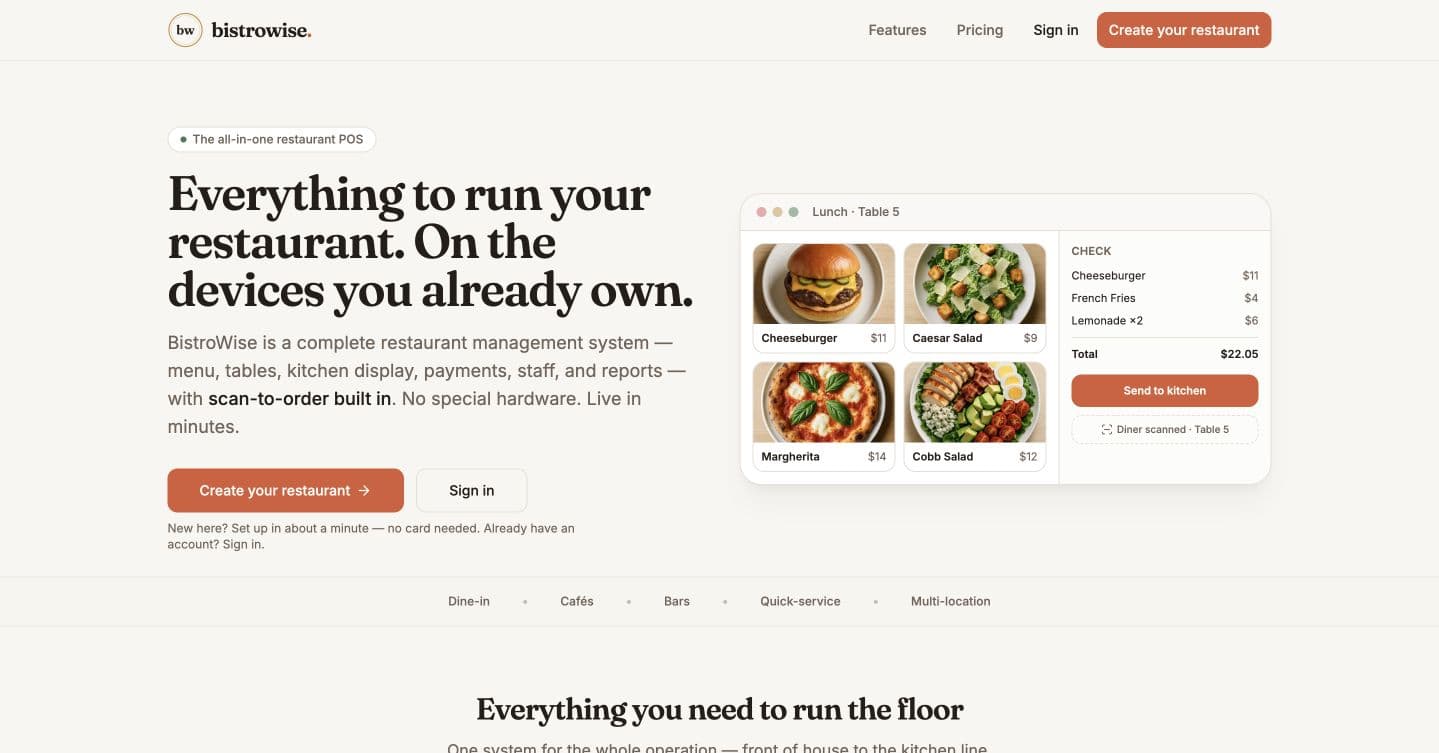
Restaurant website & kitchen-management software
Our work covers the public restaurant website and kitchen-management software. The case study shows the public website; it does not expose internal kitchen screens or operational data.
Explore CheeziousOur separate restaurant product
Our own restaurant and kitchen-management product is presented through the public BistroWise website. The marketing overview introduces menus, table QR ordering, a kitchen display, staff roles and reporting.
Explore MISE / BistroWiseExam-preparation product · private beta
A product in private beta with a public practice overview, CSS/MPT guides and planning tools. The case study shows public pages, without learner accounts, scores or dashboards.
Explore DanishwarStart with the workflow
Describe who uses the system, the task you want to improve and any existing tools or data. We can discuss discovery, scope and the right first release.
Discuss your software projectWebsite starting budgets do not price a software system. Our optional private homepage concept is for qualified website projects only; it includes no backend, ordering, checkout or integrations. Software discovery and implementation are separately scoped and quoted.
How scope and costs are agreed